
大丈夫
思想观澜|积极培育壮大新兴产业_我的网站

A |
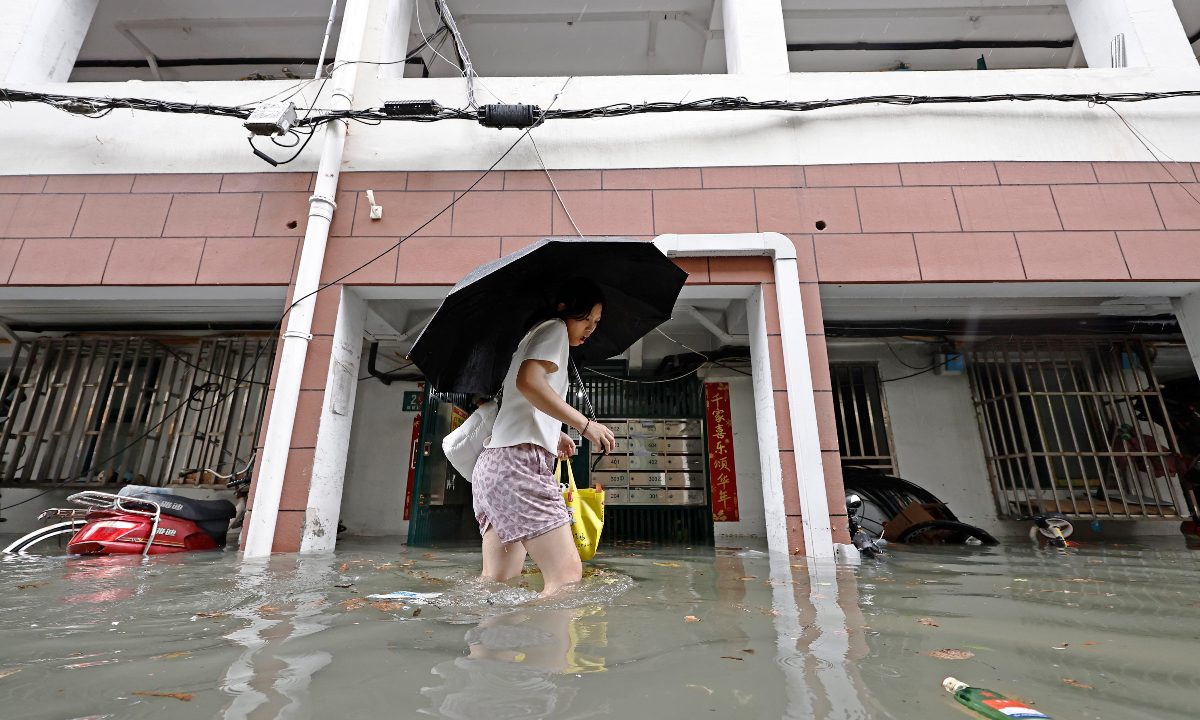
As Typhoon Dolphin continues to batter eastern China from Sunday afternoon after making landfall, a new typhoon system, Peilou, the 16th typhoon of the year, formed in the western North Pacific on, creating a rare situation with three typhoons Dolphin, Chan-hom and Peilou active simultaneously.
The National Meteorological Center (NMC) issued its second typhoon red alert of the year on Sunday morning, weather.com.cn reported.
Under the influence of Typhoon Dolphin, Shanghai experienced significant winds and rainfall. As of 5 pm on Sunday, a total of 215,600 people had been relocated from high-risk areas across Shanghai, China Radio International (CRI) reported on Monday.
Shanghai put in place preparatory measures in response to strong winds and heavy rainfall created by Typhoon Dolphin. As of 5 pm on Sunday, waterlogging had been cleared at 155 of the city’s 181 reported waterlogged sites, with response teams from different departments working to address the remaining 26, according to CRI.
Meanwhile, air traffic across East China was seriously influenced by the weather system, with widespread flight cancellations at multiple airports.
More than 80 percent of flights at Shanghai’s Pudong and Hongqiao airports were canceled as of 6 pm on Sunday. Of Shanghai Pudong International Airport’s 889 scheduled arrivals, 760 were canceled, while 729 of 897 departures were grounded. At Shanghai’s Hongqiao International Airport, almost all 431 scheduled arrivals were canceled, while 342 of 431 departing flights were unable to depart.
Typhoon-related flight restrictions also impacted Southwest China’s Sichuan and Chongqing, prompting widespread cancellations of flights to and from the Yangtze River Delta.
A typhoon track and airport impact forecast map from aviation information platform Variflight.com revealed that as many as 44 airports were likley to be affected by Typhoon Dolphin between August 9 to 12.
According to China Meteorological Administration, Typhoon Dolphin has three notable characteristics.
First, it traveled a long distance across the open ocean, showing an unusually long lifespan. The typhoon formed near the International Date Line, and its track length before landfall exceeds 6,000 kilometers. Its period of activity is expected to exceed 15 days – three times that of a typical typhoon. It become the first typhoon on record to form near the International Date Line and made landfall in China with at least tropical-storm strength, Beijing News reported on Sunday.
Second, it underwent explosive intensification and remained at high intensity for an extended period. Within 48 hours of its formation, the typhoon rapidly strengthened into a super typhoon, reaching a peak intensity of 65 meters per second, making it the second-strongest typhoon of the year so far. It maintained super typhoon strength for as long as 5.5 days and has remained at typhoon strength or above for nine days, according to weather.com.cn.
Third, Typhoon Dolphin has an exceptionally large circulation, with a 7-level wind radius of 420 to 450 kilometers and a circulation diameter of about 1,300 kilometers. It is expected to bring more than three days of strong winds to the East China Sea and torrential rain across much of East China, with local rainfall exceeding 600 millimeters at some places. Authorities urge the public to guard against flash floods and geological hazards and avoid coastal, mountainous and river-valley areas, weather.com.cn.
Typhoon Peilou formed at a tropical storm level. At 2 pm, the typhoon’s center was located over the western North Pacific, about 740 kilometers north-northwest of Saipan, Guam, packing winds of up to 65 kilometers per hour near its center, China Central Television (CCTV) reported on Sunday.
The name “Peilou” comes from China’s Macao, referencing a common migratory bird found in the region.
Typhoon Peilou is forecast to move rapidly eastward at a speed of 25 to 30 kilometers per hour, with its intensity gradually strengthening. It is expected to have no impact on China in the coming days, CCTV reported.
According to Zhou Guanbo, the chief weather forecaster at the National Meteorological Center (NMC), July to September is the peak season for typhoon formation, with August seeing the most storms form and make landfall in China.
Zhou said that typhoon activity reaches its peak in August, when the number of storms forming and making landfall in China is the highest of the year. Therefore, having three typhoons or two typhoons active at the same time is not unusual, Beijing News reported on Sunday.
According to Zhou, the Pacific entered an El Nino state in May 2026, with sea surface temperatures in the central and eastern equatorial Pacific continuing to rise. Compared with last year’s La Nina year, typhoons this year are expected to form farther east, allowing them to gain more energy and moisture over the open ocean.
This year, the number of typhoons that have formed and made landfall in July was higher than usual. Five typhoons formed over the western North Pacific and the South China Sea in July, three of which made landfall in China, Beijing News reported, citing the China Meteorological Administration.
In August, six to seven storms are forecast to form – above the long-term average of 5.6 – with two to three expected to make landfall in or significantly affect China, near the average of 2.3.
In August, one to two strong typhoons are expected to move northward into northern and northeastern China. Experts noted that even as the main body of these northward-moving typhoons weaken, their outer circulation and interaction with cold and warm air could trigger widespread extreme rainfall, which need heightened precautions, according to Beijing News.
Global Times
。 新兴产业是培育新质生产力、塑造发展新优势的重要载体,也是构建现代化产业体系的关键支撑。“十五五”时期是高质量发展的关键五年。

B | 要立足我省实际,准确把握科技创新趋势,遵循新兴产业发展规律,推动创新资源集聚,在持续积累中厚植优势、在协同发展中壮大规模、在场景应用中拓展空间,发展壮大新兴产业,让创新势能加快转化为发展动能。

C | 强化企业主体地位,筑牢新兴产业发展底座。新兴产业具有技术迭代快、研发投入高、成长周期长等特点,需要通过持续集聚创新资源积蓄发展势能,为产业发展壮大提供动力支撑。企业是创新活动的主体,也是新兴产业发展的核心载体。

D | 加快培育壮大新兴产业,要立足我省产业体系完备、制造业基础雄厚的优势,充分发挥企业在技术创新、产品研发和市场开拓中的主体作用。一方面,加快培育一批具有生态主导力和核心竞争力的科技领军企业、链主企业,发挥其在技术攻关、标准制定、产业链协同等方面的引领作用。另一方面,引导中小企业走专业化、精细化、特色化发展之路,打造更多制造业单项冠军和专精特新“小巨人”企业。通过梯次培育、融通发展,推动创新资源向优质企业加速集聚,形成大中小企业协同攻关、融通创新的雁阵格局,为新兴产业积厚成势提供坚实载体。建强创新平台,打造协同创新生态。创新平台是集聚创新资源、开展协同攻关、推动成果转化的重要载体。要充分发挥雄安新区创新高地优势,高标准建设重点实验室、技术创新中心、产业创新中心和中试熟化平台,强化企业、高校、科研院所协同创新,推动基础研究、技术研发、中试验证和产业化应用有效衔接,打通科技成果转化链条,形成创新平台与产业发展互促共进的良好格局。坚持教育、科技、人才一体发展,完善高层次人才引进培养机制,推动人才、资本、数据等创新要素向重点领域集聚。健全科技金融服务体系,引导耐心资本、长期资本投向战略性新兴产业和未来产业。

E | 深化数据要素市场化配置改革,提高创新资源配置效率,形成创新平台与要素保障互促共进的良好局面,为新兴产业发展提供持续动力。拓展应用场景,持续释放市场活力。应用场景是技术创新成果落地转化的重要载体,能够推动创新成果加速转化,为新兴产业积厚成势注入强劲动力。我省拥有丰富的工业场景、城市场景和消费场景资源,要围绕智能网联汽车、机器人、人工智能、新型储能等重点领域,加快拓展工业制造、交通物流、城市治理、能源管理等应用场景。

F | 加大对新技术新产品首台套、首批次、首版次应用支持力度,推动新技术、新产品优先试用首用,以场景开放带动市场开放,以需求牵引促进技术迭代和产业创新。充分发挥产业体系完备、制造业基础扎实的优势,加快数字技术与实体经济深度融合,推动工业互联网、大数据、人工智能等新一代信息技术在重点行业应用,统筹推进传统产业数字化转型与新兴产业培育壮大。

G | 通过全方位、全链条的数字赋能,创造更多应用需求,推动产业链、创新链和价值链向高端延伸,为新兴产业积厚成势提供源源不断的场景支撑。强化链群协同,形成集聚效应。产业链协同和集群化发展是新兴产业做大做强的重要路径。聚焦新一代信息技术、新能源、新材料、高端装备、生物医药等重点领域,系统性推进产业集群培育,加快形成特色鲜明、优势互补的新兴产业集群。推动龙头企业与上下游企业协同创新、协同配套、协同发展,促进创新链、产业链、供应链深度融合。通过延链补链强链,不断提升产业集聚水平、形成规模效应,推动单个企业优势向产业集群优势转变。

H | 深化区域协作,推进京津冀协同创新,加强与京津在科技研发、成果转化、产业配套等方面的深度合作。积极承接北京科技成果转化和高端产业项目转移,推动跨区域产业链布局和创新资源共享,在更高层次、更大空间汇聚新兴产业发展合力。完善服务保障体系,优化产业发展环境。

I | 良好的发展环境是新兴产业成长壮大的重要支撑。持续深化重点领域改革,推进要素市场化配置体制机制改革,完善市场准入、公平竞争、知识产权保护等制度体系,营造稳定透明可预期的市场环境。完善市场准入制度,优化新业态新领域市场准入环境。健全科技金融服务体系,创新金融支持工具,引导更多金融资源投向战略性新兴产业和未来产业。打造市场化、法治化、国际化一流营商环境,系统提升政务服务效能,完善公共服务平台功能,降低企业创新创业成本,充分激发各类经营主体创新创造活力。(作者:张春玲,系燕山大学教授)。

J |
Current article:http://37bi72h.cesangrangshunzashuangruijiu.pics/list_rhtt8o/j3r4.html
Published on:19:09:19
珠光宝气_Random reading
- 08-20德罗赞遭国王裁员 1000万保障薪金分3年兑付
- 08-228月26日晚间沪深上市公司重大事项公告最新快递
- 08-26凌晨3点 44岁阿隆索英超执教首秀:前皇马主帅PK 创奇特纪录
- 08-22真我非我,Realme撤出中国,OPPO兄弟停止内战
- 08-26山东救援队再度出发驰援广西!9人携带3艘冲锋舟近400件生活物资赶赴宁明县
- 08-25Vivek Agnihotri And Bhushan Kumar Join Forces For A Film On Operation Sindoor
- 08-20《红色沙漠》公开“目前为止的更新内容”
- 08-23“蛇年启运,福满家门”——星河幼儿园2025春季学期开工大吉
- 08-25天各一方!卢顿可能两连降,去年一同降级的伯恩利今晚赢球回英超
- 08-22OpenAI 将崩溃调试视为流行病学研究,修复了存在 18 年之久的 GNU libunwind 漏洞

春妮的周末时光_Active users
- 苹果首席执行官库克微博“推广”homepod智能演讲者,有声有色
- 不是人来的
- 不许俄罗斯获胜,30国宣布将向乌派兵,关键时刻,美国高官抵俄,兵器海陆空,原创 不许俄罗斯获胜,30国宣布将向乌派兵,关键时刻,美国高官抵俄
- 第30届鲁台经贸洽谈会将于近期举办,国台办介绍相关情况
- 富阳再称“杭州王” 孙江豪现场求婚
- 哈利伯顿不满联盟赛程安排:看到复出首战客战鹈鹕 我直接愣住了
- 泡泡玛特亮相台湾秋季旅展吸引青少年
- 杭州地铁9号线二期站名正式公布,7大站点抢先看!
- 保育保健||预防甲流,守护健康——预防甲流知识宣传
- 不想相亲的年轻人,在工会找到了什么?
- 抚顺县:全力出击清冰雪
- Iraqi man arrested in Germany over alleged involvement in war crimes as a member of IS
- 市场的底气:不缺钱
- 传统商圈踏出新消费之路
- 瑞可达:上半年净利润1.11亿元 同比下降29.36%
- 入党のために性上納、生理用品すら配給されない…128万人を有する北朝鮮軍で横行する“女性兵士”への“凄惨な人権侵害”
- 莆田鞋掘金细分领域 功能鞋很硬核
- 【研报观点】8月26日沪锡最新观点汇总
求婚大作战_Hottest this week
- 08-20美公布多项针对伊朗经济制裁,将针对全球范围内仍与伊朗保持商业往来的实体及国家实施制裁;伊朗议会议长回应:没人相信美国胡言乱语
- 08-20搭载M2芯片的新款iPad Pro国行售价6799起 最高支持2TB
- 08-24【现货】8月19日海外各地区合成橡胶现货市场价格汇总
- 08-26【仓单】8月26日上期所原油期货仓单较上一日持平
- 08-20轻花优品利息违规
- 08-21China condemns unilateral sanctions without basis in international law or authorization of UN Security Council: FM
- 08-22"韩版腾讯"一场大火:韩国一夜退回石器时代 沦陷整整4天
- 08-23活塞vs尼克斯G2前瞻:布伦森冲击总分2-0 坎宁安力争终结15连败
- 大丈夫 copyright
- Some of the content comes from the Internet. If you have any offence, please raise it.